
How to care for your garage door springs?
There’s a common misconception that the garage door opener does the heavy lifting. In reality, the opener only controls movement. The real work is done by the springs.
Garage door springs carry the full weight of the door and keep it balanced as it opens and closes. Without them, even a powerful opener wouldn’t be able to lift the door safely. That’s what makes springs one of the most important, and most stressed, components in the entire system.
Taking care of them isn’t optional. It’s essential to the safety and lifespan of your garage door.
Understanding the Role of Garage Door Springs
Most residential garage doors use one of two spring systems.
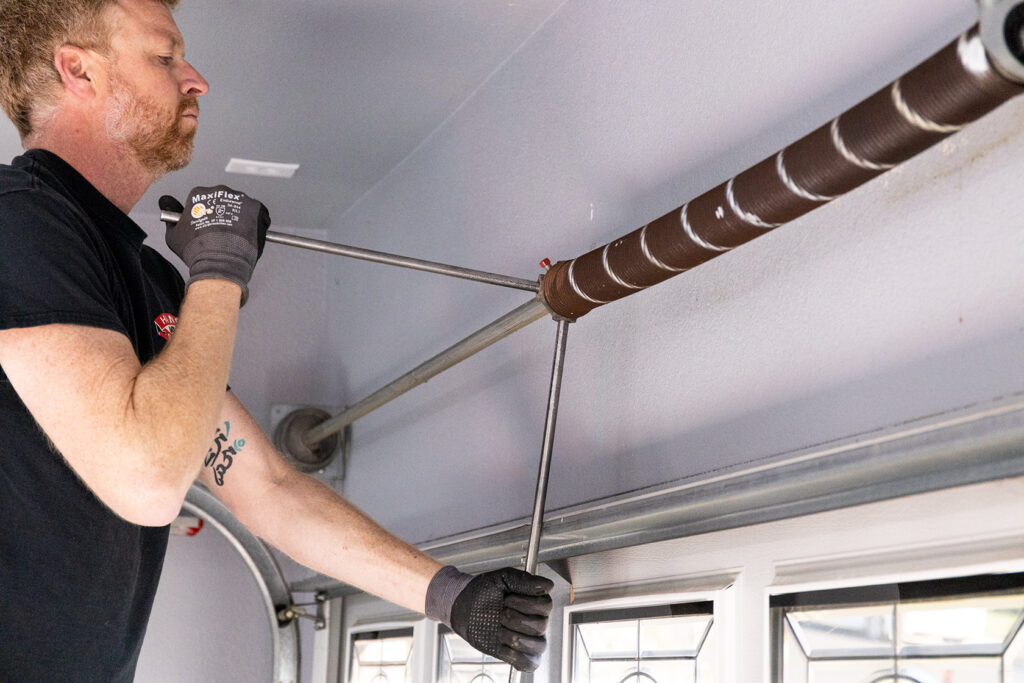
Torsion springs are mounted above the door and operate by twisting under tension. Extension springs run along the sides of the door and stretch as the door moves. While they work differently, both serve the same purpose: counterbalancing the weight of the door so it can move smoothly and stay controlled.
Every time you open or close your garage door, those springs cycle under pressure. Over time, that repeated stress begins to wear them down.
Why Springs Wear Out Faster Than Other Parts
Springs operate under constant tension. Unlike other components that move freely, springs are always under load, even when the door is not in motion.
Daily use gradually weakens the metal. Environmental conditions make it worse. Humidity can lead to rust, while temperature changes can affect how the metal expands and contracts.
The heavier the garage door, the more strain placed on the springs. That means lifespan isn’t just about time, it’s about usage and conditions.
Eventually, every spring reaches a point where it can no longer maintain proper tension.
What Happens When a Spring Begins to Fail
Spring failure doesn’t always happen instantly. In many cases, the system shows signs before a complete break.
The door may start to feel heavier than usual. It may struggle to open fully or stop after moving only a few inches. In some situations, the door may close faster than expected, which is a clear sign that the counterbalance is no longer working correctly.
When a spring finally breaks, the change is immediate. The opener may attempt to lift the door but won’t have enough force to do so. Continuing to operate the door in that condition can damage other components, including the opener itself.
More importantly, a broken spring creates a safety risk. Without tension control, the door can drop suddenly.
How to Recognize Early Signs of Spring Damage
You don’t need technical expertise to notice when something is wrong.
A visible gap in a torsion spring is one of the clearest indicators of failure. That gap means the spring has snapped and is no longer holding tension. In other cases, the signs are more subtle.
| Symptom | What It Usually Means |
| Door won’t open | Spring no longer supporting weight |
| Door opens partially | Loss of tension |
| Door closes too quickly | Counterbalance failure |
| Increased noise | Worn or stressed spring |
| Crooked or uneven door | Uneven spring tension |
These signs often appear before total failure. Catching them early can prevent more serious issues.
The Role of Lubrication and Routine Care
Friction is one of the main causes of premature spring wear.
Applying the right lubricant a few times a year helps reduce that friction and protects the metal from corrosion. It also allows the spring to move more smoothly through each cycle, which reduces strain over time.
What matters here is consistency. Irregular maintenance leads to uneven wear, which shortens the lifespan of the spring.
At the same time, using the wrong type of lubricant can attract dust and debris, creating the opposite effect. Proper products and application make a difference.
Why Proper Sizing and Installation Matter
Not all springs are the same. Each garage door requires a specific type and size of spring based on its weight and dimensions.
If the wrong spring is installed, the system won’t be properly balanced. That imbalance forces the springs to work harder than they should, leading to faster wear and a higher risk of failure.
Correct installation ensures that the tension is distributed evenly and the door operates smoothly from the start.
Why Spring Repairs Should Never Be DIY
Garage door springs are under extreme tension. That tension is what allows them to lift a heavy door, but it’s also what makes them dangerous to handle.
When a spring is adjusted, removed, or replaced, that stored energy must be carefully controlled. Without the proper tools and experience, the risk of injury is high.
This is one area where professional service isn’t just recommended, it’s necessary.
Professional Garage Door Spring Service in Killeen
At Premier Overhead Co., spring inspection and replacement are handled with precision and safety in mind. Our technicians understand how tension, balance, and system alignment work together, ensuring that every repair restores proper function, not just temporarily, but long-term.
If your garage door has become difficult to open, is making unusual noise, or shows signs of imbalance, it’s worth having the springs inspected before a full failure occurs.
Contact us today for expert garage door spring repair and replacement in Killeen.
A Final Thought on Spring Care
Garage door springs don’t fail without warning, they wear down over time.
The key is recognizing those early signs and addressing them before the system becomes unsafe. A well-maintained spring system keeps your garage door operating smoothly, protects other components, and prevents unexpected breakdowns.
And when it comes to springs, waiting too long is usually what turns a simple repair into a bigger problem.