
Understand your garage door emergency release feature
Most people don’t think twice about their garage door. You press a button, it opens. You press it again, it closes. It’s one of those everyday conveniences that works so reliably, it becomes invisible.
Until it doesn’t.
A power outage, a malfunctioning opener, or a mechanical issue can instantly take that convenience away. When that happens, the question becomes simple: can you still open your garage door safely?
The answer is yes, but only if you understand how to use the emergency release feature correctly.
What the Emergency Release Cord Actually Does
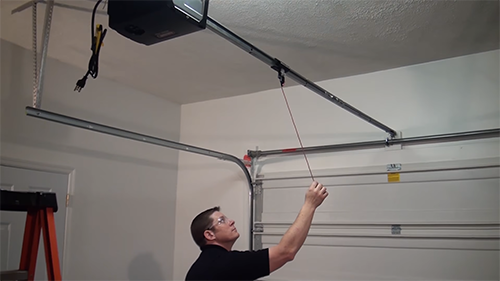
Every automatic garage door opener is equipped with an emergency release mechanism. You’ve probably seen it before, a red cord hanging from the trolley rail above the door.
That cord is not just there for show. It’s designed to disconnect the garage door from the opener system, allowing you to operate the door manually when power is lost or the opener fails.
When everything is working normally, the opener controls the movement. When you pull that cord, you take control back manually.
It sounds simple, but the timing and method matter more than most people realize.
Why Knowing How to Use It Matters
In an emergency, hesitation or incorrect use can make the situation worse.
If the door is under tension or positioned incorrectly, pulling the release can cause the door to shift suddenly. In some cases, especially with damaged springs or cables, the door can become unstable once it’s disconnected.
That’s why understanding this feature is not just about convenience, it’s about safety.
How to Safely Disengage the Garage Door
The safest scenario for using the emergency release is when the garage door is fully closed. In that position, the weight of the door is supported by the ground, not the system.
From there, disengaging the opener is straightforward. The red cord is pulled downward, which releases the trolley mechanism and separates the door from the motor.
Once disconnected, the door can be lifted manually.
What matters most here is control. The door should feel steady and balanced as you move it. If it feels unusually heavy or uneven, that’s a sign something else may be wrong within the system.
When the Situation Becomes Dangerous
The real risk comes when the door is not in the closed position.
If the garage door is stuck open and you attempt to pull the emergency release, you’re removing the support system while the door is elevated. In a properly balanced system, this may still be manageable. But if there’s any underlying issue, like a weakened spring or cable, the door can drop quickly.
That kind of sudden movement can cause serious injury or damage.
This is why professionals strongly advise against disengaging the opener when the door is open unless you fully understand the condition of the system.
Reconnecting the Door to the Opener
Once power is restored or the issue is resolved, the door needs to be re-engaged with the opener.
This process requires the door to be brought fully back down so it aligns correctly with the trolley system. When the mechanism reconnects, you’ll usually hear a distinct click, signaling that the door is once again attached to the opener.
After that, testing is essential. Running the door through a full open-and-close cycle ensures everything is aligned and functioning as expected.
If the door does not respond properly after reconnection, it’s a clear sign that something deeper is wrong.
When the Emergency Release Signals a Bigger Problem
Many homeowners assume that needing to use the emergency release is just a one-time inconvenience. Sometimes it is, but not always.
If the door becomes unresponsive, difficult to move, or fails to reconnect properly, the issue may not be electrical at all. It could be related to springs, cables, or internal components within the opener system.
At that point, continuing to operate the door manually or attempting repeated fixes can make things worse.
This is where professional diagnosis becomes important.
Why Professional Help Is Often the Safer Choice
While the emergency release feature is designed for homeowner use, it doesn’t eliminate the risks associated with the system itself.
Garage doors operate under tension, and problems are not always visible. What seems like a simple issue, like a door not opening, can be tied to components that require proper handling and adjustment.
A trained technician can identify whether the issue is with the opener, the balance of the door, or the structural components behind it. More importantly, they can restore the system safely without creating additional risk.
Modern Upgrades and Backup Solutions
If power outages are a recurring concern, newer garage door openers offer built-in battery backup systems. These allow the door to function even when electricity is unavailable.
Some systems also include smart connectivity, giving you better control and monitoring of your garage door remotely.
Even with these upgrades, however, the emergency release remains a critical feature. Technology can fail, but manual control is always the fallback.
Professional Garage Door Service in Killeen
At Premier Overhead Co., we handle everything from emergency repairs to full system upgrades. Whether your issue is electrical, mechanical, or structural, our technicians are trained to identify the root cause and resolve it safely.
If your garage door has become unresponsive, difficult to operate, or if you’re unsure about using the emergency release feature, it’s better to have it inspected before the problem escalates.
Contact us for fast, professional garage door service in Killeen.
A Final Thought on Emergency Preparedness
The emergency release cord is one of the simplest features on your garage door, but it’s also one of the most important.
It’s easy to ignore, until you need it.
Understanding how and when to use it gives you control in situations where most people feel stuck. And more importantly, it helps you avoid turning a minor issue into a dangerous one.
Knowing what to do ahead of time makes all the difference.