
Why are Safety Cables Important?
A garage door is one of the largest and heaviest moving parts in your home, often weighing between 300 and 500 pounds. Yet, most people never think about what allows it to move so smoothly every day. When you press the button and the door lifts effortlessly, it feels simple, but behind that motion is a tightly balanced system built around springs, drums, and safety cables.
Those cables carry a serious load every single time the door moves. They don’t just help lift the door, they help control it. Without them, the entire system loses stability, and that’s where real risk begins.
How Safety Cables Actually Protect You
Safety cables exist for one reason: to prevent a dangerous situation from turning into an accident.
Garage door systems operate under constant tension. Springs are wound tightly, and cables are under load at all times. If something fails, whether it’s a worn cable, a misaligned drum, or a weakened spring, the stored energy in the system can release instantly.
When cables are in good condition, they keep that force controlled. When they’re damaged or worn, they lose that control. That’s when doors begin to move unevenly, hesitate, or in worst cases, drop suddenly.
This is why safety cables are not just a mechanical component, they are a protective barrier between normal operation and a potential failure.
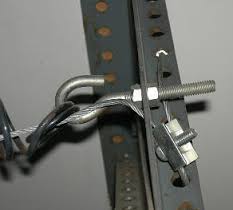
Why Cables Wear Out Faster Than You Think
Every time your garage door opens or closes, the cables wrap and unwrap around metal drums while supporting hundreds of pounds. That constant movement creates friction, and over time, friction leads to wear.
On top of that, cables are exposed to environmental conditions. In humid areas, moisture can lead to rust. In hotter climates, expansion and contraction affect tension. Cold weather can make materials brittle. None of this happens overnight, which is why many homeowners don’t notice anything wrong until the damage is already advanced.
Even something as small as a worn bearing or slightly misaligned track can increase strain on the cables, speeding up deterioration without obvious warning.
What a Failing Cable Looks and Feels Like
Cable failure rarely happens out of nowhere. The system usually gives subtle signals first.
You might hear new noises during operation, grinding, squeaking, or a slight snapping sound. The door may feel heavier than usual or hesitate as it moves. In some cases, it may start to look uneven, with one side slightly lower than the other.
Visually, cables may begin to show fraying or rust. Sometimes they loosen and slip off the drum, hanging awkwardly near the side of the door. These are not minor issues, they are early indicators that the system is under stress.
To make it clearer, here’s how different stages typically present:
| Condition | What You’ll Notice | What It Means |
| Normal | Smooth, quiet, balanced movement | System healthy |
| Early wear | Slight noise or resistance | Increased strain |
| Visible damage | Fraying, rust, loose cable | Failure approaching |
| Complete failure | Door stops, drops, or jams | Immediate risk |
When the Problem Isn’t Just the Cable
One mistake people make is assuming the cable itself is always the issue. In reality, cables often fail because something else in the system is off.
A weakened spring can shift tension unevenly, forcing cables to compensate. If a spring is too tight, it can push the cable out of its groove. Misaligned drums or poor installation can also cause uneven wear.
So when a cable starts failing, it’s usually part of a bigger picture. Fixing just the cable without addressing the cause often leads to the same problem happening again.
Why This Is Not a DIY Repair
This is where things get serious.
Garage door cables and springs are under extreme tension. Trying to repair or remove them without proper training isn’t just risky, it can be dangerous. The force stored in the system can release suddenly, causing injury or further damage to the door.
This isn’t comparable to basic home repairs. It requires the right tools, the right process, and experience handling high-tension systems safely.
The Cost of Ignoring the Problem
Many homeowners delay repairs because the door is “still working.” That’s usually a mistake.
A worn cable doesn’t fix itself. It continues to weaken until something gives. When it does, the repair is rarely limited to just the cable. You’re often looking at additional damage to springs, tracks, or even the opener system.
In most cases, a simple cable replacement is far more affordable than dealing with a full system failure later on.
Why Regular Inspection Makes a Difference
The easiest way to avoid sudden failure is consistency.
A periodic inspection can catch small issues before they become serious. Something as simple as early fraying or minor misalignment can be corrected quickly if caught in time. Left alone, those same issues can lead to complete breakdown.
Maintenance isn’t just about keeping the door working, it’s about keeping it safe.
Professional Garage Door Cable Repair and Replacement
Premier Overhead Co. handles every component of your garage door system, including cables, springs, drums, panels, and tracks. With years of hands-on experience, our technicians understand how these systems behave under real conditions, not just in theory.
Every repair is approached with a full-system mindset. That means identifying the cause, correcting the issue, and making sure your garage door operates safely and reliably moving forward.
If you’ve noticed changes in how your garage door moves, or simply want peace of mind before something goes wrong, it’s worth having it inspected.
Contact us today to schedule your garage door inspection or repair.
Common Questions About Garage Door Safety Cables
Safety cables don’t usually get attention until something goes wrong, which is why a few common questions come up.
Most cables last several years, but their lifespan depends heavily on usage and environment. A door used multiple times a day will naturally wear faster than one used occasionally.
A damaged cable may still allow the door to function temporarily, but it’s unpredictable. The risk isn’t that it won’t work, it’s that it can fail without warning.
And when it does fail, especially under load, the result can be sudden and forceful. That’s why early repair is always the smarter move.